Renovations and Re-designs of Public Libraries
What I Did
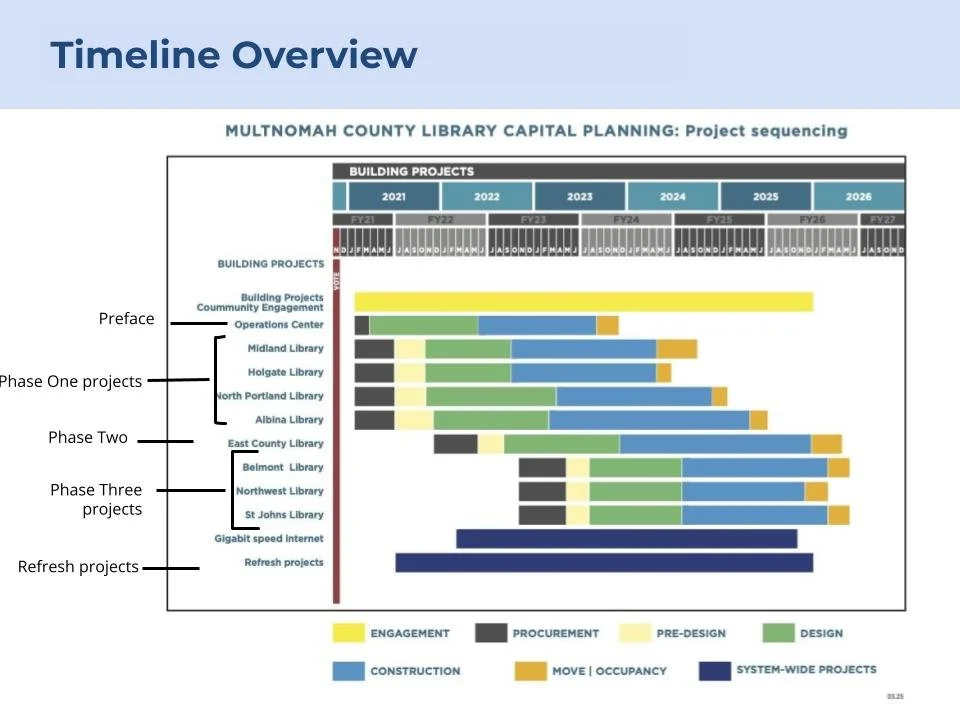
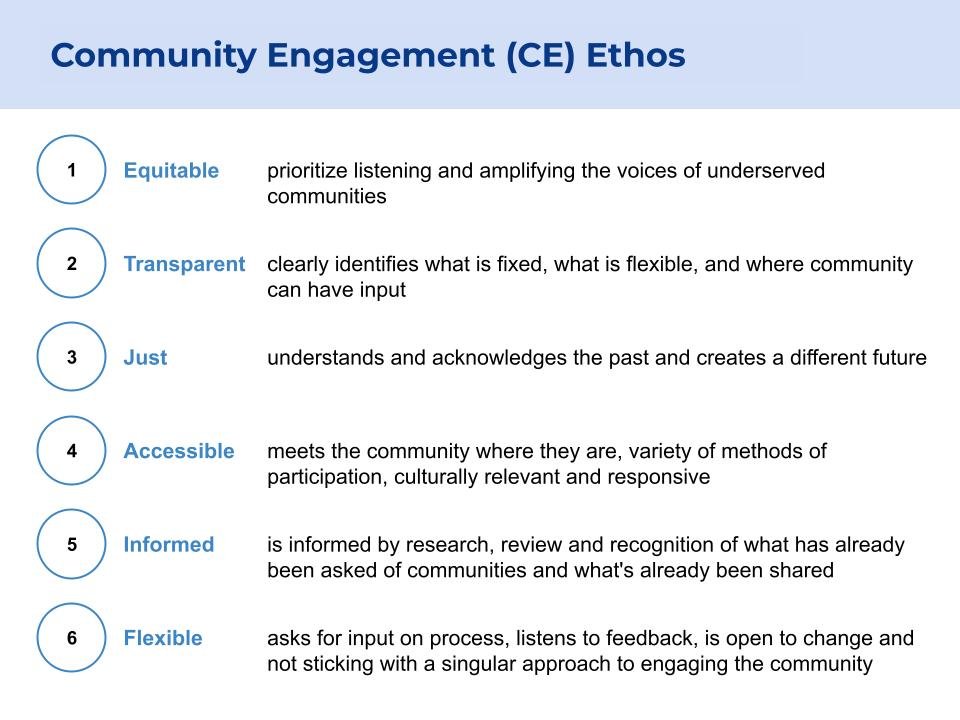
As a part of the Multnomah County Library capital bond projects, I led and managed the community engagement efforts (scope, schedule, budget, strategy, implementation) across 8 renovation, expansion and new public library building projects. I collaborated with 8 different architecture firms across the projects to develop and implement equitable community engagement activities and strategies that would inform the designs of these new public spaces. As the main community engagement specialist on the County/client team, I acted as the through-line across our design research work with different firms to ensure the library’s equity and community-centric values were reflected in each project.
Role: Community Engagement Strategist (aka Design Research Strategist and Program Manager)

Teammates
Multnomah County Library Program Management Office

Stakeholders
Multnomah County communities
Partner design firms:
Colloqate Design
Bora Architecture & Interiors
LEVER Architecture
Noll & Tam Architects
Holst Architecture
MultiCultural Collaborative
Adjaye Associates
Hennebery Eddy Architects

Toolkit
Paid focus groups
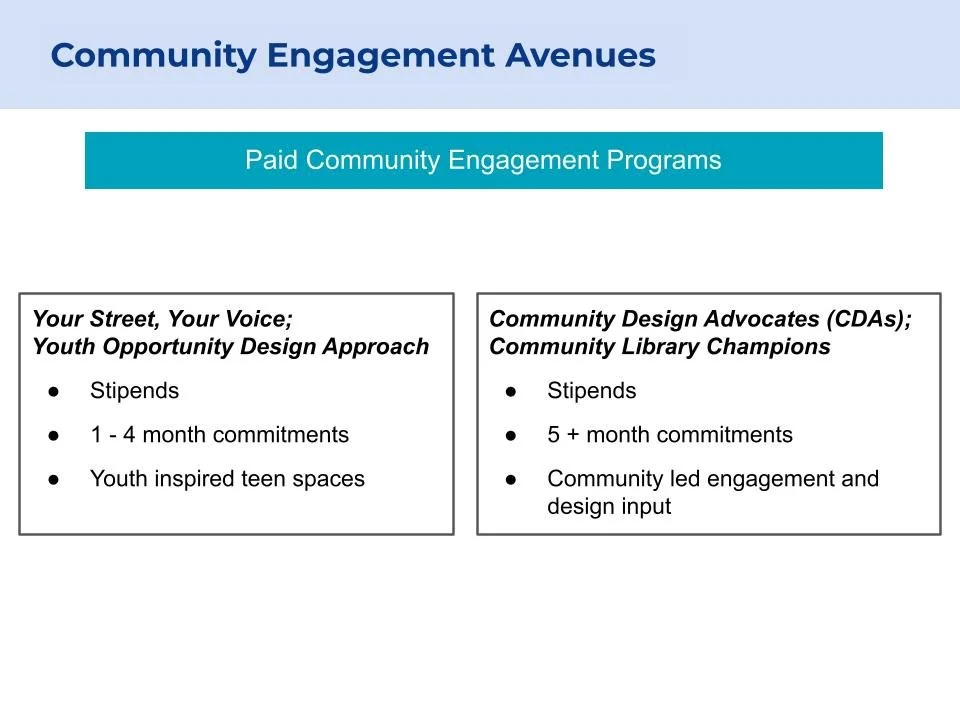
Paid community program
Tabling outreach
Surveys
Interviews
Public workshops
Dot voting
Active listening
Qualitative analysis
MURAL digital workspace
Asana
Google Workspace
The Process

Clarify the Goal
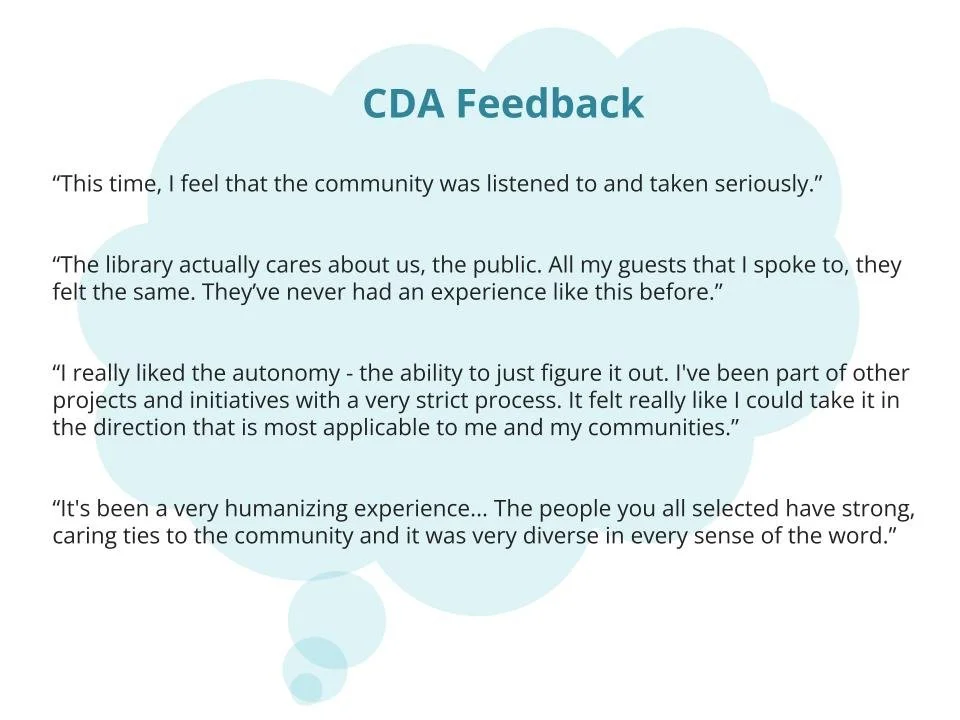
Our team’s goal was to create new, modernized community-informed public library spaces as a part of a voter-approved bond. We wanted our communities, especially those who are often left out of public processes, to be able to help shape these future spaces, and upon openings, see themselves represented in these spaces and to feel that these spaces are theirs to use.

Understand the Situation
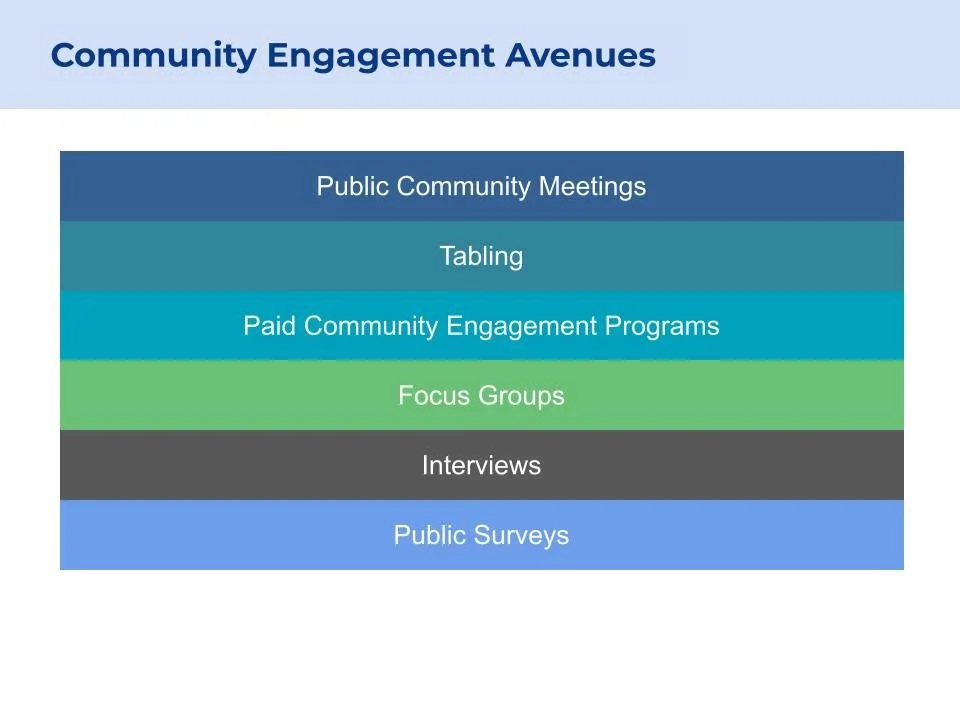
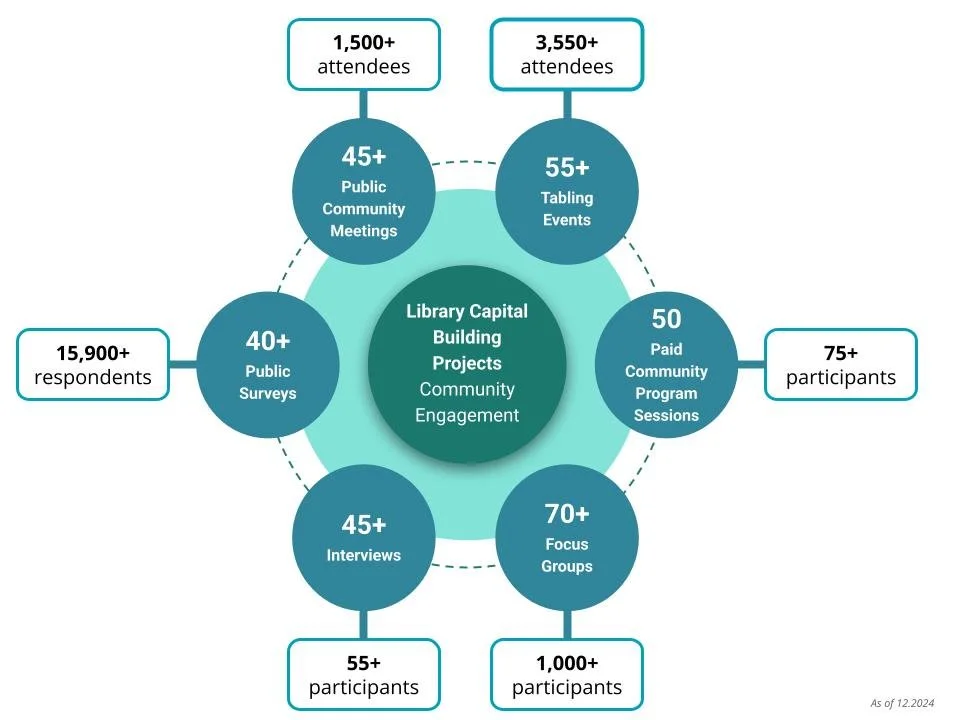
We used a various mix of public workshops, tabling outreach, paid focus groups, paid community engagement programs, interviews, and surveys for each of our 8 projects, depending on the local communities and design team scope. Through these methods, we collected thousands of comments for each project that were then synthesized by the design teams to pull out key themes and narratives from the community input.

Bridge the Gap
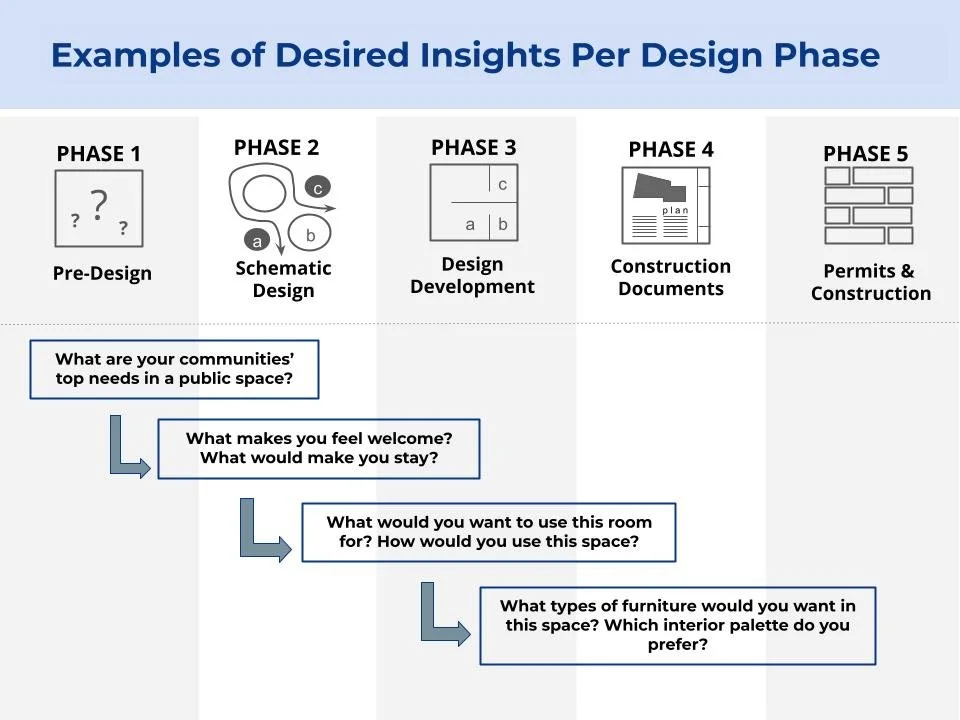
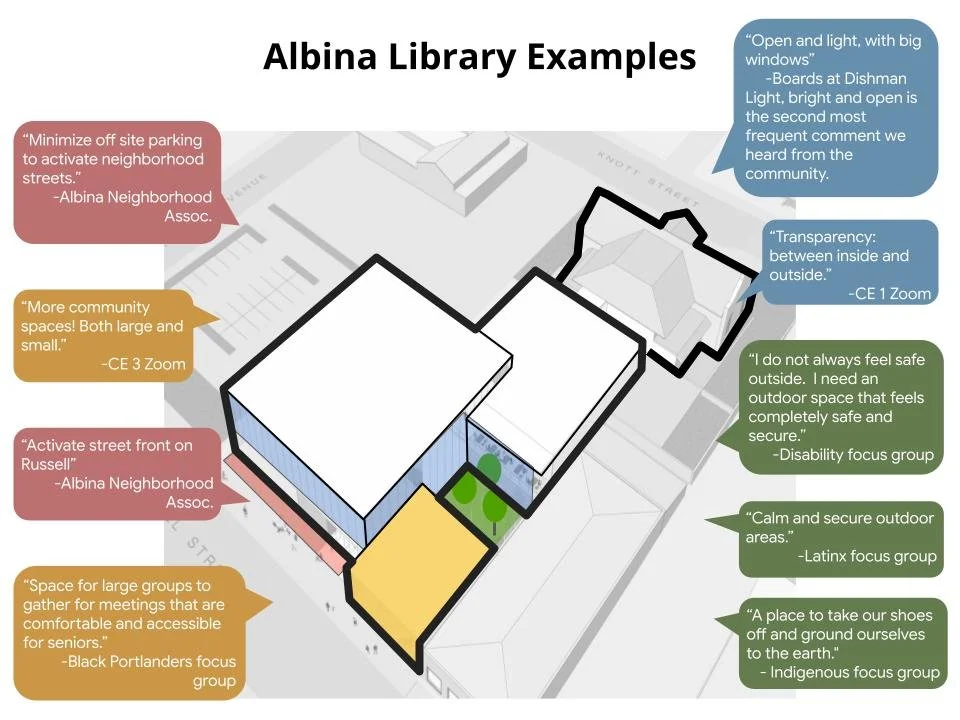
We intentionally developed community engagement strategies to align with the design process of each project to ensure that community feedback around specific topics can actually inform the design at appropriate phases. We are also transparent with community that not everything will be able to be implemented, but that hearing their thoughts is a core way for the team to assess holistically how the new spaces should be designed to meet community needs now while giving the spaces flexibility to adapt to community needs as they change in the future, all within our bond constraints of scope, schedule, and budget. We traced the community comments through to design decisions and shared back multiple times to ensure a feedback loop. As final designs were created, I asked the design teams to create annotated renderings that showcase examples of how community input helped shape the space designs.
How I Did It
Click through the gallery to read more about each step of my process.